
Will Prime Minister Modi start a conversation on the need for people to limit the size of their families, asks Colonel Anil A Athale (retd) on the occasion of World Population Day, July 11.

Microsoft India and South Asia President Puneet Chandok highlighted at the Bengaluru Tech Summit that while AI adoption is straightforward, achieving tangible impact on the ground presents the greater challenge. He urged leaders not to delay embracing AI, drawing parallels with ISRO's innovative approach to space exploration. Chandok also stressed India's crucial role in global AI development, stating that if AI works for India's diverse population, it will work for the world.

Industry experts advocate for India to develop its own artificial intelligence (AI) safety framework, distinct from US or EU models, to address unique challenges like deepfakes and cyberattacks. They call for a comprehensive commitment involving all stakeholders and a hybrid regulatory approach combining voluntary and binding measures, as the Indian government also considers new AI regulations.

The Supreme Court has highlighted the need to adapt laws to changing demographic realities, stating that laws penalising more than two children have lost relevance due to declining fertility rates. The court referred a case challenging such a disqualification to a larger bench, emphasising the importance of guarding against irreversible fertility decline and considering reproductive autonomy in the context of electoral participation.

Experts recommend awaiting the findings of the 2021 Census, which is yet to be conducted, before introducing population control policies.

This World Diabetes Day, Dr Vikram Vora, medical director, International SOS, explains why irregular work hours make diabetes harder to prevent and manage. There are simple steps, he says, that you can take to keep yourself healthy.
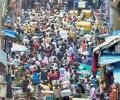
Efforts of the government have been successful in reining in the growth of population, she said in a written reply.
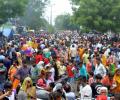
On the ground, rural medical infrastructure and more crucially, women's access to reproductive health services is practically non-existent in Uttar Pradesh, reports Geetanjali Krishna.
'I think public awareness should be created and laws should not be made only for the sake of politics'

The objective should be clear: Energy security without abandoning environmental responsibility; water security without ignoring local concerns; and strategic resilience without sacrificing public confidence, notes Varun Arya.
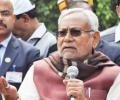
In yet another sign that not everything is fine between Bihar's ruling partners, Chief Minister Nitish Kumar opposes the BJP's demand for a population control law -- even while seeking a caste-based census, a red flag for the BJP. M I Khan reports.

India is developing a 'Gross Domestic Knowledge Product' (GDKP) to identify and define its knowledge assets, a move aimed at safeguarding them amidst global efforts to monetise and 'weaponise' knowledge, according to NITI Aayog member R Balasubramaniam.

Shuchita Patel, an Indian-American Democrat, is making a historic bid for Forsyth County Commissioner in Georgia, a region with a dark racial past. Running against a 16-year unopposed incumbent, Patel aims to bring change and stand up to what she calls a "bully" opponent, driven by a desire to create a better community for future generations amidst a deeply divided American political landscape.

Before protesting against the State, the citizen should not have to ask: Sir, may I protest, please?, asserts Prem Panicker.

The Odisha government has implemented extensive precautionary measures, including setting up 9,299 shelters and evacuating over 1 lakh people, as Cyclone 'Akvan' is expected to cross between Gopalpur and Puri on Friday. Educational institutes are closed, emergency response teams are deployed, and tourists are barred from coastal areas to ensure zero casualties. The IMD has issued warnings for heavy rainfall and storm surge in affected districts.

Delhi experienced its most polluted Diwali in five years, but the official air quality figures are under scrutiny. Several monitoring stations reportedly went offline during the peak firecracker period on Sunday night, leading to discrepancies between government and private agency data. Experts and opposition leaders have raised concerns about the reliability of the AQI tracking, with allegations of "data fraud" and calls for greater transparency and accountability.

'The BJP still has a vote share of over 40 per cent in Uttar Pradesh. In a triangular contest, even a vote share of 30 per cent can be sufficient to form a government.'

'The larger lesson for India Inc is that promoter oversight and professional management are not inherently contradictory. The difficulty arises when the boundaries between the two are unclear.'

Chief ministers from southern states convened at the Southern Zonal Council meeting in Kovalam, where Karnataka CM DK Shivakumar advocated for the 1971 census as the basis for delimitation and a freeze on Lok Sabha seats, while also addressing the contentious Cauvery water and Mekedatu dam issues.

Meerut Police's action came a day after the MP indirectly blamed Muslims for the population growth in the country.

Following the Ebola outbreak in parts of Africa, Indian authorities are closely monitoring the situation and reinforcing surveillance measures to prevent the virus's potential spread into the country. Health experts emphasise the importance of vigilance and preparedness.

This is the first time Modi has raised the issue, even though a section of the BJP has been vocal about the matter.

Prime Minister Narendra Modi cautioned against the 'weaponisation' of technology and critical minerals at the BRICS summit, advocating for cooperation to foster shared prosperity. Concurrently, Chinese President Xi Jinping announced plans for an open-source AI ecosystem for BRICS nations, positioning Beijing as a key technology partner amid global AI competition.

'Wages have not risen. Rural wages have stagnated. The growth was 0.7 per cent last year. For casual and irregular labour, the wage growth is negative.'

'1991 was an exceptional period in Indian history.' 'A big 400-volt shock was administered to the system, which was required. Today, we are in a much, much better position.'

'People don't like leaders who just crib and complain without offering a clear objective.' 'Theoretically and pragmatically, Rahul has to show an agenda beyond bad-mouthing Mr Modi on economic policies, foreign policy...'

New Delhi must look for formal, institutional statements issued directly from Washington rather than rely on casual pronouncements meant for local audiences, notes Ambassador Rajasekhar.

At what age should society stop regulating life choices and allow people to make their own?

India too can rise to the top if the 1.4 billion Indians back home are given better opportunities to use their innate talent and capacity to work hard, with right incentives in a more meritocratic rules-based system, asserts Ajay Chhibber.

Education sector experts agree that using the "best technology" was essential to ensure students did not have to sit for an examination all over again because of a question paper leak.

If one has to compare the tenures of the two prime ministers one must credit Nehru with laying the foundations on which Modi is building a grand edifice, asserts Colonel Anil A Athale (retd).

At this point at 85, Sharad Pawar is like a mature but ageing trapeze artist who is assessing if he will still land on his feet if he jumps from the safe perch of INDIA to the NDA. Can a Great Betrayal be presented as a tactical move? Watch Sharad Pawar do it, predicts Aditi Phadnis.

'We will give Rs 25,000 to parents having a second child or more at the time of delivery itself.'

The NDA government has gradually nuanced its position on the issue of demographic challenge.

Young adults in India are increasingly grappling with high blood pressure, a condition once thought to affect mainly the older demographics. Cardiologists point to sedentary lifestyles, obesity, chronic stress and unhealthy diets as primary drivers of this silent epidemic.

NDA leaders have defended proposed amendments to the Women's Reservation Act and the Delimitation Bill, 2026, arguing women have waited long enough for reservation, while opposition parties allege the process could undermine India's federal and democratic structure, particularly impacting southern states.

What lessons opposition parties need to learn post defeat of Mamata Banerjee in West Bengal elections? The election saw spectacular victor of BJP which rose from 3 seats in 2016 to 206 seats in 2026 assembly elections.
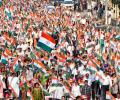
On average, Indian women are having fewer children than needed to maintain the population size from one generation to the next, without migration.

'The reason why they rushed through the bill was they wanted to avoid using the 2026 Census because the 2026 Census by their own decision will be a caste census.' 'The BJP knows that a significant share of the OBCs who will get captured in the census, for the first time after the 1931 Census, are against the BJP. Only a segment of the OBCs are in their favour.' 'So they wanted to avoid the OBC reservation among women, which is a demand of a lot of Opposition parties.'

Gwadar is viewed as a critical pearl in China's maritime strategy as it would give a permanent logistical footprint near an important choke point - the Strait of Hormuz and the oil rich Persian Gulf, explains Commodore Venugopal Menon (retd).
